
Sexual health does not need to be awkward or complicated. Whether you are dating, meeting a new partner or arranging a private adult booking, a few practical habits can reduce your risk of sexually transmissible infections, commonly called STIs.
STIs may be passed through vaginal, anal or oral sex, shared sex toys and, in some cases, close skin-to-skin contact. Many infections cause no obvious symptoms, so looking or feeling healthy does not confirm that someone is STI-free. Testing, protection and honest communication should be treated as normal parts of sexual healthcare.
Have the Conversation Before Contact
Talk openly about when each person was last tested, whether either person has had new partners since then, what protection will be used, and whether either person has any symptoms or recent diagnoses.
This should not feel like an interrogation. It simply gives both people the information they need to make a decision. Because STIs can be present without symptoms, saying “I feel fine” is not a substitute for getting tested.
Clear boundaries are equally important. Consent can be changed or withdrawn at any time, and no one should be pressured into skipping protection. The EscortLocate guide to escort boundaries, safety and respect explains why direct communication protects everyone involved.
Alcohol and other drugs may affect judgment. When someone is too intoxicated to communicate clearly, use protection correctly or provide meaningful consent, the safest decision is to postpone the encounter.
Use Condoms and Barriers Correctly
Condoms reduce the risk of many STIs, including chlamydia, gonorrhoea and HIV. Dental dams can protect against oral sex, while gloves may be appropriate when hands have cuts or when moving between different body areas.
Before using an external condom:
- Check its expiry date and make sure the packet is undamaged.
- Put it on before genital contact begins.
- Pinch the tip and roll it down completely.
- Use water-based or silicone-based lubricant with latex condoms.
- Hold the base during withdrawal to reduce slipping.
- Use a new condom for each partner, session and sex toy.
Never wash or reuse a condom. Avoid using an internal and external condom at the same time because friction between them may increase the chance of breakage.
Condoms and dental dams lower the risk, but they cannot eliminate it. Herpes, HPV and syphilis may spread through skin that a barrier does not cover. This is why effective STI prevention combines barriers with testing, vaccination and communication.
Make STI Testing Part of Your Routine
Testing is the only reliable way to know your current STI status. How often you should test depends on your sexual practices, number of partners, condom use, symptoms and recent exposures.
Consider arranging an STI test when:
- You start seeing a new sexual partner.
- You have condomless sex or a condom breaks.
- You notice sores, unusual discharge, a rash or pain when urinating.
- A current or recent partner receives a positive result.
- You have multiple or frequently changing partners.
- A clinician recommends routine screening.
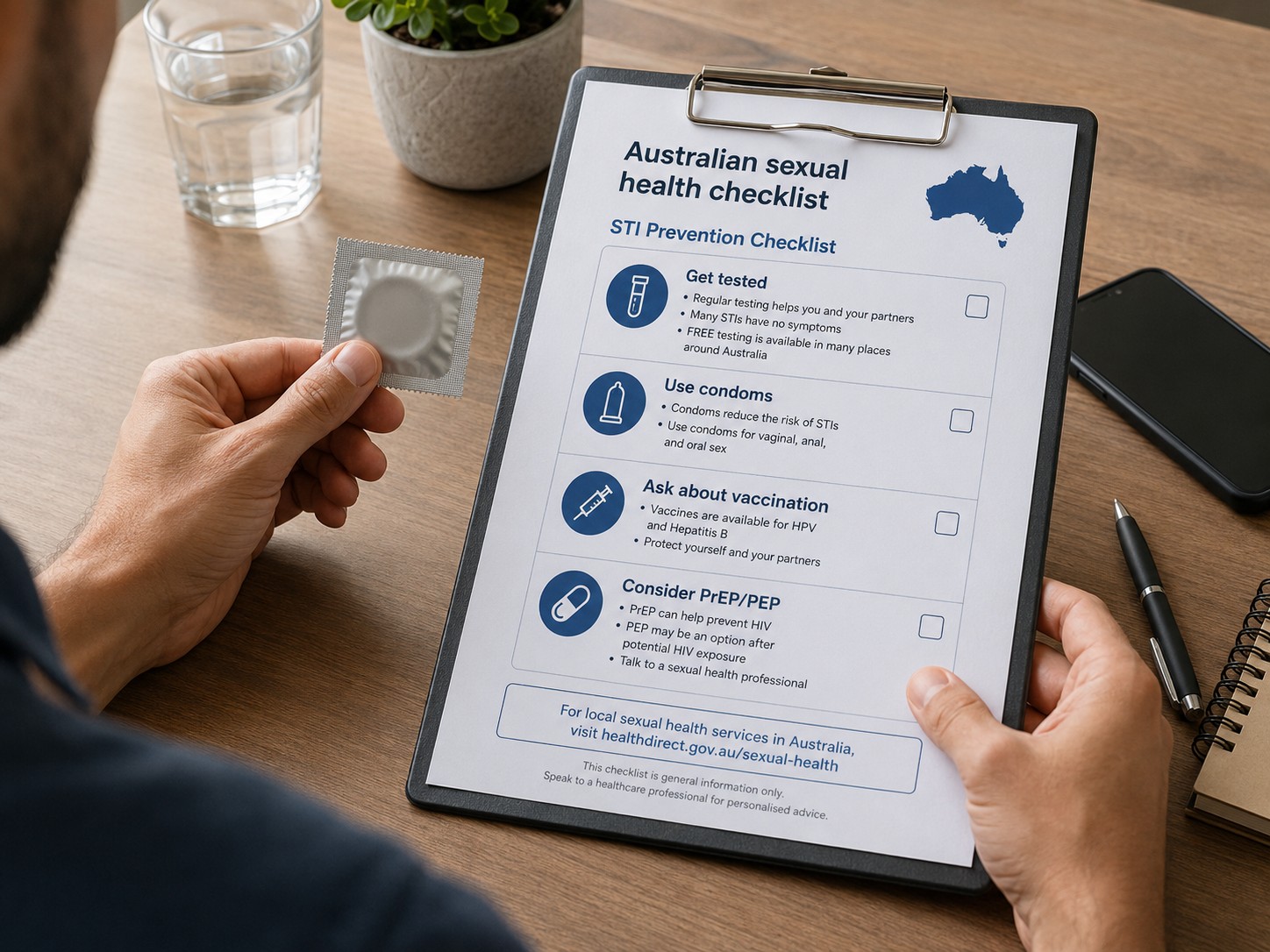
A sexual health check may involve urine, blood tests or swabs from the throat, genitals or rectum. The tests offered should reflect the type of contact that occurred rather than assumptions about someone’s gender, identity or relationships.
The same approach applies to private adult bookings: ask sensible questions rather than rely on guesswork. This first-time escort booking guide explains how clear expectations can reduce awkwardness and confusion.
Check Your Vaccination History
Vaccination can prevent several infections associated with sexual contact.
Australia’s HPV vaccination program covers eligible adolescents and young adults, while some adults may also benefit depending on their circumstances. Hepatitis B vaccination is recommended for certain higher-risk groups and people who are not already immune.
Ask a GP, pharmacist or sexual health clinic to review your records, particularly if you were vaccinated overseas or cannot access your childhood vaccination history.
Understand the Difference Between PrEP and PEP
PrEP is a medication taken before potential exposure to HIV. It is intended for HIV-negative people who have an ongoing or anticipated risk of acquiring HIV. A clinician can determine whether it is suitable and arrange the necessary testing and monitoring.
PEP is an emergency course of HIV medicine taken after a possible exposure. It must be started within 72 hours, and beginning earlier is better. After a condom break or possible HIV exposure, contact a sexual health clinic, GP or hospital emergency department promptly.
PrEP and PEP protect against HIV. They do not prevent chlamydia, gonorrhoea, syphilis, herpes, HPV or other STIs, so condoms and testing still matter.
Prevent Cross-Contamination
Clean reusable sex toys according to the manufacturer’s instructions and allow them to dry before storage. Use a fresh condom on a toy when sharing it or moving it between partners or body areas.
Damaged, cracked, or highly porous toys can be difficult to clean thoroughly and may need to be replaced.
Handwashing is sensible general hygiene, particularly before handling condoms or moving between body areas. However, showering, douching or urinating after sex should not be treated as STI prevention. These actions cannot replace condoms, dental dams, testing or vaccination. Australian prevention guidance focuses on proven protection and regular sexual health checks.
What to Do After a Possible Exposure
Contact a GP or sexual health clinic and explain:
- What happened
- When it happened
- What type of contact occurred
- Whether protection was used
- Whether there are any symptoms
This information helps the clinician advise you about testing windows, treatment, HIV PEP and whether you should temporarily avoid sexual contact.
After a positive result, complete the prescribed treatment and follow the clinician’s advice about retesting and when it is safe to resume sexual activity. Recent partners may also need testing or treatment. Australian health services can provide support with confidential or anonymous partner notification.
Whether you browse an Australian escort directory, compare Sydney escort profiles or view Melbourne escort listings, sexual health should never be left to assumption.
Make Prevention Part of the Plan
No single precaution eliminates all STI risks. The most practical approach combines correctly used condoms and barriers, testing based on your circumstances, appropriate vaccination, HIV prevention where relevant and honest conversations before contact.
Treat sexual health like any other part of looking after yourself: use reliable information, avoid assumptions and seek professional advice when your circumstances change.
This article provides general health information and is not a substitute for personalised medical advice.
Frequently Asked Questions
Can You Get an STI While Using a Condom?
Yes. Condoms reduce the risk of many infections, but herpes, HPV and syphilis may spread through skin that the condom does not cover.
How Often Should I Get an STI Test?
There is no single testing interval for everyone. A GP or sexual health clinician can recommend a schedule based on your partners' sexual practices, condom use, symptoms and previous results.
Does Washing or Urinating After Sex Prevent STIs?
No. These may be personal hygiene habits, but they do not prevent sexually transmissible infections.
What Should I Do If a Condom Breaks?
Seek prompt medical advice about STI testing, emergency contraception where relevant and HIV PEP. PEP must be started within 72 hours of possible HIV exposure.
Can PrEP Prevent Every STI?
No. PrEP helps prevent HIV when taken as prescribed, but it does not prevent infections such as chlamydia, gonorrhoea, syphilis, herpes or HPV.